Now accepting trial orders from 500 kg | EU MOAH/MOSH compliance ready | Direct from Rajasthan
Our 6-Step Quality Process

From supplier qualification to final dispatch

Each shipment moves through six rigorous quality checkpoints. No batch leaves India without buyer-approved third-party verification.

01

Supplier Qualification

We audit and qualify processing partners for facility standards, certifications, and production capability before any order is placed.

02

Pre-Production Spec Agreement

Buyer specifications confirmed in writing with the processor before production begins. No surprises on either side.

03

In-Process QC

Processor's internal quality control covers cleaning, de-husking, sterilization, and packaging stages.

04

Independent Lab Testing

Pre-shipment samples sent to SGS, Italab, or equivalent accredited labs for full Certificate of Analysis.

05

COA Approval

Certificate shared with buyer for explicit approval before dispatch. You verify before we ship.

06

Shipment & Documentation

Full export documentation prepared and shipped with cargo — COA, phytosanitary, fumigation, certificate of origin, packing list.

COA Parameters

What we test in every shipment

Our standard Certificate of Analysis covers physical, microbial, chemical, and contamination parameters required by US, EU, and Middle Eastern food safety standards.

CategoryParameters Tested
PhysicalPurity %, Moisture %, Swell Volume (ml/g), Colour Index, Ash %, Acid Insoluble Ash
MicrobialTotal Plate Count, Yeast & Mould, E. Coli, Salmonella, Staphylococcus aureus
Heavy MetalsLead (Pb), Arsenic (As), Cadmium (Cd), Mercury (Hg)
ChemicalPesticide Residue (multi-residue screen), Aflatoxins (B1, B2, G1, G2, Total)
MOAH / MOSHMineral Oil Aromatic Hydrocarbons (MOAH), Mineral Oil Saturated Hydrocarbons (MOSH) via LC-GC-FID
SterilizationMethod verification (Gamma Irradiation / Steam Treatment)
EU Compliance

MOAH / MOSH screening — why this matters

Mineral Oil Hydrocarbons (MOAH and MOSH) are contaminants that can enter agricultural products through mechanical lubricants during processing, printing inks on packaging, or jute/burlap bags treated with batching oils. MOAH compounds are suspected genotoxic and carcinogenic.

In 2025, the EU's Rapid Alert System (RASFF) issued notifications for psyllium husk powder withdrawn from the German market specifically due to MOAH contamination (RASFF Notification 2025.6476). The EU has since enacted strict maximum residue limits.

Sigma Global proactively screens for MOAH/MOSH using LC-GC-FID analytical methods, ensuring compliance with European standards EN 16995 and JRC guidelines. This testing is included as standard for all EU-destined shipments and available on request for other markets.
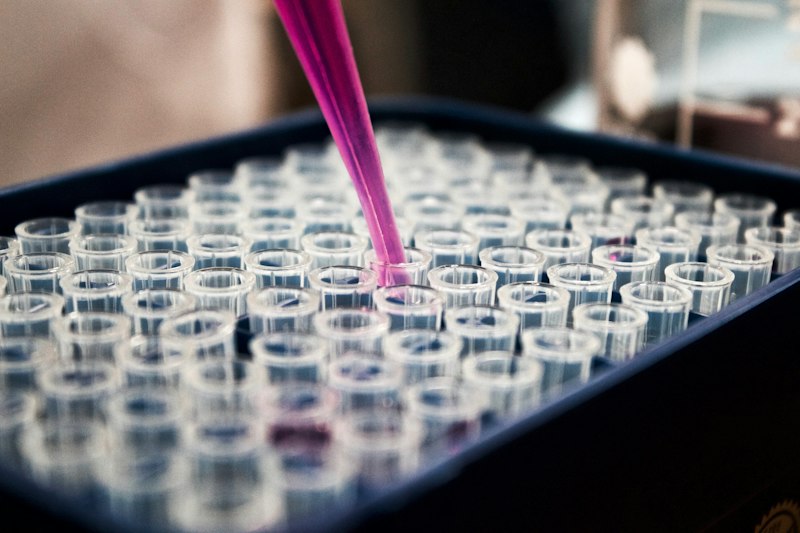
Laboratory testing equipment
Sterilization Methods

Dual-market approach

We offer two sterilization methods to match the regulatory and labelling requirements of your destination market. We do not offer Ethylene Oxide (ETO) — it leaves measurable residue and faces increasingly strict regulation in EU and US.

Method 01

Gamma Irradiation

Cobalt-60 cold-process sterilization. Chemical-free, zero residue. Does not alter moisture, texture, or mucilage properties. Accepted by USFDA and Health Canada. Preferred for US pharmaceutical and supplement buyers.

USFDA Approved Zero Residue EU labelling guidance provided
Method 02

Steam Treatment

Heat-based autoclaving at 121–124°C. Chemical-free. Preferred for EU food-grade applications where irradiation labelling under Directive 1999/2/EC is undesirable. Recommended for EU food manufacturers and clean-label brands.

EU Clean Label No Labelling Bakery Friendly
Packaging Compliance

PFAS-free, EU PPWR compliant

The EU Packaging and Packaging Waste Regulation (PPWR) introduces strict limits on Per- and Polyfluoroalkyl Substances (PFAS) in food-contact packaging, effective August 12, 2026. Limits: 25 ppb single PFAS, 250 ppb total PFAS, 50 ppm total fluorine.

All Sigma Global food-contact packaging — including inner liners, HDPE bags, and FIBC bulk bags — is independently certified PFAS-free, meeting the EU PPWR requirements. All packaging is also compliant with Regulation (EU) 2026/245 concerning authorized substances for plastic food contact materials.

We address EU compliance proactively — not reactively. For buyers targeting European markets, this isn't optional, and neither are the suppliers who skip it.

Request a sample Certificate of Analysis

See exactly what we test, how we report it, and what compliance looks like in practice.

Get Sample COA